
昼颜
私享城市:黄姚古镇 古韵悠长 豆豉浓香_我的网站

一 | 中国小康网 独家专稿文|曲雪松认识黄姚古镇之前,先知道的,是黄姚豆豉。
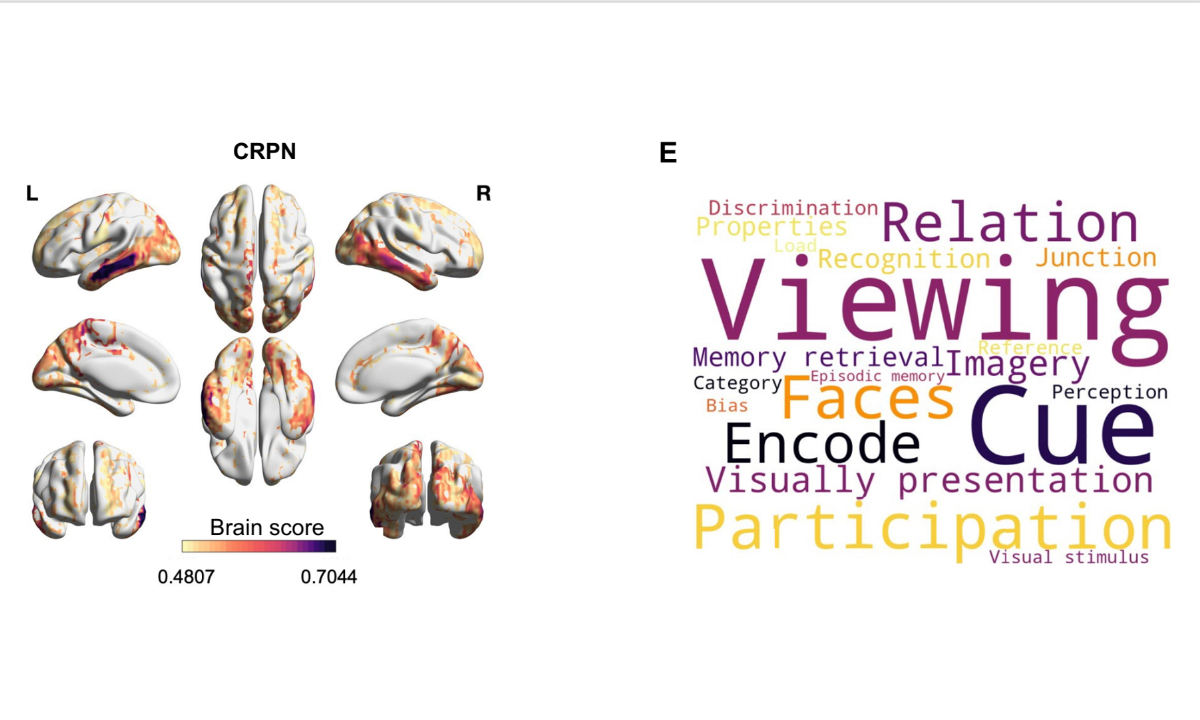
Chinese scientists have developed a “brain-reading” AI model that could help predict the risk of depression among adolescents up to four years in advance by analyzing how humans respond to facial expressions, a technology expected to inspire future development of embodied intelligent humanoids capable of perceiving human emotion and thoughts through nuanced facial cues.
WHO data show that around 332 million people worldwide have depression, about one-third of whom have treatment-resistant forms of the condition. In China, an estimated 95 million people suffer from depression, National Business Daily reported, citing statistics from the China Mental Health Survey.
Using data from a population-based longitudinal adolescent cohort recruited across several European countries, the research team led by Lu Han, assistant professor at the School of Artificial Intelligence, Shenzhen University, has built an AI model that predicted which 19-year-olds were more likely to develop depression at the age of 23. The predictions were backed up by an independent clinical cohort of individuals with depression. The team’s paper was published in the journal Science Advances this month.
According to Lu, the study used brain scans taken at age 19 to predict depression-related symptoms at age 23. The study focuses on adolescence because the transition from adolescence to early adulthood is a key developmental period when depressive symptoms can increase rapidly. The earlier risks are identified, the greater the opportunity for prevention, Lu told the Global Times on Monday, adding that the findings need to be further validated in middle-aged and older adults and across different ethnic groups in future research.
In this study, the researchers analyzed data from adolescents in the IMAGEN, a population-based longitudinal cohort recruited across several European countries. At age 19, participants underwent an fMRI emotional-face task, and their emotional symptoms were assessed using standardized questionnaires. Genetic data obtained from blood samples were also analyzed, and participants were followed up at age 23. The researchers examined whether neural representations of angry faces at age 19 were associated with emotional symptoms and could predict elevated emotional symptoms four years later.
According to Lu, people without depression can more easily distinguish emotional changes based on others’ facial expressions and respond accordingly – for example, responding with friendliness to a smiling expression. But people with depression cannot do this, and are more likely to assume people are angry with them.
A brain-aligned deep-learning model developed by Lu’s team suggested that those participants whose brains were less able to distinguish between different facial emotions and tended to perceive others as angry were more likely to develop symptoms of depression and anxiety in adulthood.
The hypothesis that adolescents at risk of depression may respond differently to other people’s facial expressions than those without such risk based on the negative information processing bias long observed in depression research: people at risk of depression are more likely to notice, interpret, or remember negative social information, Lu said.
The researchers focused on angry facial expressions because they signal social threat and rejection, which are closely linked to interpersonal difficulties and negativity bias associated with depression. They hope to further understand how this bias develops within the visual system.
Building on this, they created a deep learning model, which mimics how the brain processes visual information, to predict how the brain encodes abstract emotional concepts such as anger.
They found that 19-year-olds whose response to facial expressions was skewed in favour of negative emotions or memories were the most likely to develop some form of depression.
Based on these findings, Lu’s team then developed a marker that can identify possible warning signs.
According to Lu, the study found that the computational biomarker was linked to the depression-related variant rs11123030 and polygenic risk for depression, suggesting that genetic susceptibility may affect emotional perception. It also provided predictive information beyond family stress and socioeconomic factors, complementing rather than replacing environmental risk factors. Therefore, depression is neither purely genetic nor purely psychological, but a complex mental disorder arising from the interplay of genetic susceptibility, brain development, emotional and cognitive processes, and life experiences.
According to Lu, the study is also expected to advance AI by aligning deep neural networks with human brain activity and using parameter perturbations to probe neural mechanisms, allowing models to both predict and explain how biases may arise.
The findings suggest that future affective computing and embodied AI should go beyond simply labeling facial expressions, incorporating visual details while preventing prior assumptions from overriding real-time sensory input, Lu said, adding that the findings could provide valuable insights for developing more interpretable robotic perception systems that more closely emulate the way humans process emotions.
。 认识黄姚古镇之前,先知道的,是黄姚豆豉。朋友从广西带回来的,小小一瓶,摆在餐桌上并不起眼,可是打开之后,一股奇特的浓香扑鼻而来,也牢牢锁住了味蕾。能有如此绵长而回味无穷的香气,想必,也是有一番独到的制作工艺吧,那又是怎样的一片山水,和民间智慧的积淀呢? 以至于几年之后,当我置身于古镇,再次被这一袭浓香包围时,竟像是见到了一位阔别已久的老朋友,感觉分外亲切。这香气,是随着晨曦的光晕一起,将古镇唤醒的。青墙黛瓦的岭南特色建筑,在古老高大的榕树掩映下,散发出岁月悠悠的烟火气息。九宫八卦布局的石屋,错落在山间的平地之上,看似随意,实则有序。绝大多数房屋和街巷都保留了原汁原味的风貌,脚下的青石板路泛着被岁月打磨的光泽,仿佛留存着当年商队走马驰骋的痕迹。 目之所及,早起的人们开始忙碌,孩子们四处奔跑呼唤小伙伴,欢声笑语此起彼伏。街上的小店陆续开门营业,卖菜的居民、旅行的游客沿着镇里街巷穿梭于每一个角落,而就在这些角落之间,不时的,能闻到阵阵酱香,香味儿源头,就是门店前一个个小缸里的豆豉酱、辣椒酱及各式酱菜,其间,都有豆豉的身影。街边小店炉火上的平底铁锅里,滋滋作响的油煎豆腐,撒一把豆豉,就有沁入心脾的香味升腾出来;隔壁,一大碗新出锅的热汤米线里,加一勺豆豉和猪肉碎炒制而成的拌料,汤汁就鲜美无比,能让人一口气喝到见底儿。这时你会不由得感叹,这豆豉,简直就是古镇的灵魂。 当地朋友介绍,豆豉的历史已经有几百年之久。它是以当地特产的黑豆为主料,用当地的水,以及当地人世代流传的古法工艺制成,没有任何添加剂,干净而纯粹,虽然诞生于大山之中,却早已名声在外,远销东南亚各国。

二 | 甚至,当地的史料记载,过去从这里考中的举人,千里迢迢赴外地上任,行囊中都少不了豆豉酱,因此还流传着一首打油诗:“县官爱豆豉,味道果然长。一餐没豆豉,下饭总不香。”可不是么,离乡在外的人都有同感,故乡的山水带不走,故乡的味道却是可以装在行囊中的,即便只是小小的一瓶一罐,也能抚慰山高水远的思乡之情,哪拍只是片刻。

三 | 不过对现代人来说,虽地处广西贺州昭平县东北部的深山之中,古镇也算不上遥远了,从桂林开车两个小时就能到达。

四 | 大山仿佛是她的深闺,阻隔了尘嚣,也独辟了这一处清幽古韵。镇子里最让人难忘的景观,是位于镇中低洼地段的仙人古井。这是一口建于明朝万历年间的古井,和别处圆圆泉眼的古井不同,它是由几座方池相连,每个方池都有限定的功能,按水流的方向,依次分为饮水、洗菜、洗手、洗衣之用,所有的泉水最后汇入河中。朋友说,制作豆豉的水与这里的井水是同源,只有这里的水,才能成就豆豉的奇香。每年的农历七月初七,镇里会举行一项特别的民俗活动 “取水节”。这一天,古镇的居民都会来到仙人古井取水,据说这一天的井水有着特别的神力,可以保佑家人平安健康。

五 | 古井周边是山体和民宅,有石阶相连,居民沿阶梯上上下下,在水池边洗涮忙碌。他们的日常,在我这个游客的眼里,已然是一幅岁月静好的婉约画卷。离开古镇时,我也买了几瓶黄姚豆豉,带不走这里的山水,可以带一点这里的味道,让亲朋好友们也和我一样,从味道开始认识黄姚吧。

六 | 生活里有诗,但没有所谓的远方,因为它就在眼前,我用笔用心记录的每一个瞬间。

七 | 离乡在外的人都有同感,故乡的山水带不走,故乡的味道却是可以装在行囊中的,即便只是小小的一瓶一罐,也能抚慰山高水远的思乡之情,哪拍只是片刻。 (《小康》·中国小康网 独家专稿) 本文刊登于《小康》2024年4月下旬刊。
Current article:http://www.minpinpengcemiuanjiuxuan.pics/si0irz/t7dd.htm
Published on:11:07:27
- 前8月汽车企业出口超180万辆 中国汽车加速驶向海外市场
- 我国已建829个尘肺病康复站
- 《龙之谷》×张家界线下联动精彩花絮
- 国家发展改革委部署加快2026年新型政策性金融工具投放工作 加大对民间投资项目支持力度
- 360°臀下扣篮?21岁小将力克陈登星获世界扣篮冠军 拿走50万奖金
- 费尔顿:倘若利拉德顶替库里 勇士依旧能拿下冠军
- "대규모 인명 피해"… 티베트·네팔 접경지역 산사태
- 又暖又燃 文艺轻骑兵一线“送大餐”
- Typhoon Dolphin to move inland, bringing heavy rain to multiple regions
- “아이들에게 도전할 기회를”…양주 승마 꿈나무 키우는 왕윤재 양주시승마협회장